Eternal longing


Philip Peters


In the totality of 'time' as we imagine it, we people are present only for a short while. We live temporarily in a continuity which is otherwise marked by our absense. This time is defined according to the calendar system we designed partly for that purpose. Time before and after has no comparable structure with regard to us. We discern something like 'history', partly documented and partly not, from the origin of the universe with all possible theories about the genesis of life, evolution, the development of man etc., but we don't participate in that past in any other way than by knowing about it (which might be a reason to acquire that knowledge: to become part of the past which provides us a much longer presence, even during our absence, than our short life can grant us). It's even more uncertain what will happen after our presence: we are not really able to imagine that. In any case there is some symmetry here: first we were absent, now we are here for a while and before long we will be gone again.
Maybe we can organize things psychologically in such a way that we may feel we partake of history by aquiring knowledge of it, it is certain that history is in a biological sense a part of us, in the strukture of our DNA, but also in collective memory and in culture. It is only a slight exaggeration to say that we were already present before having been born physically.
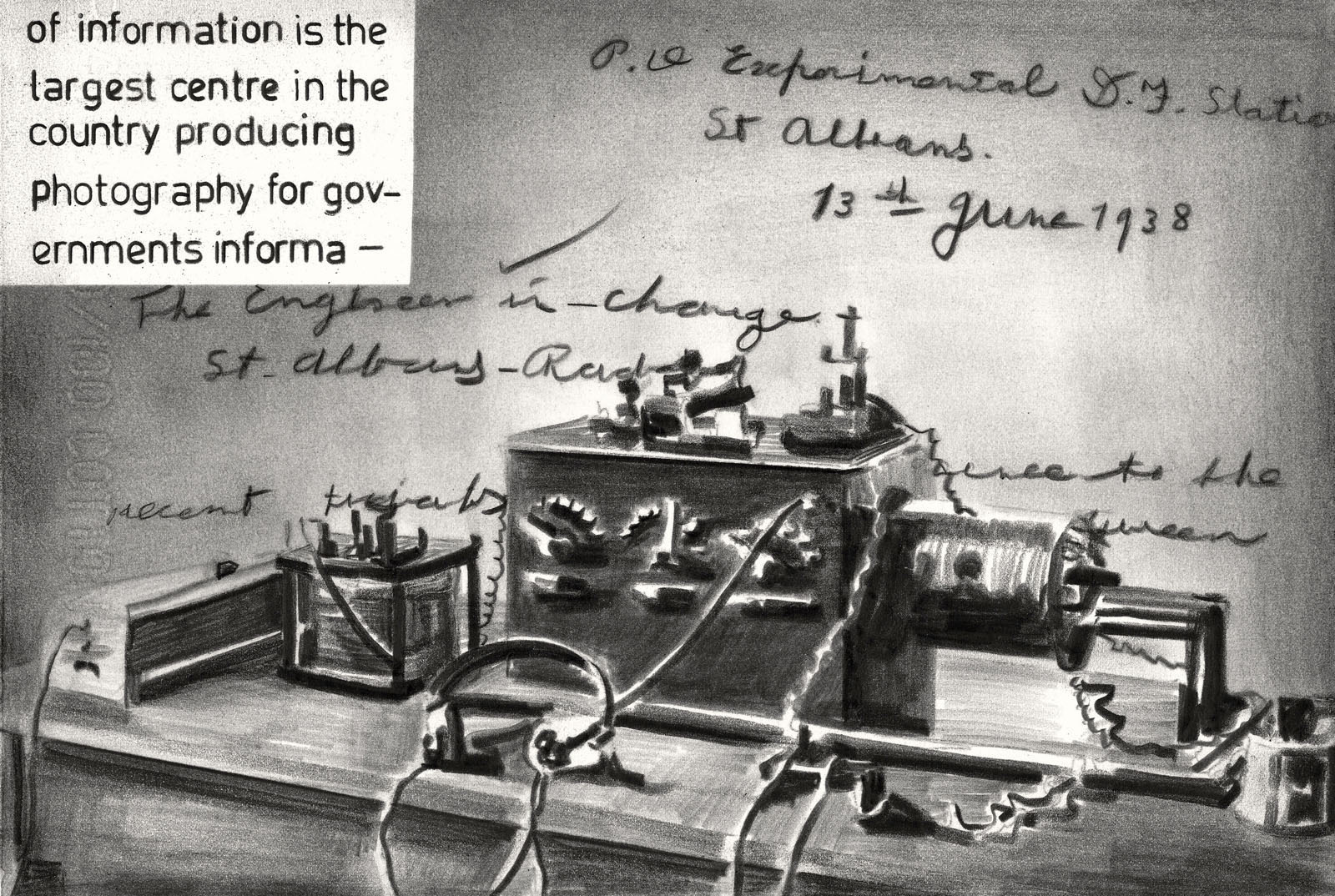
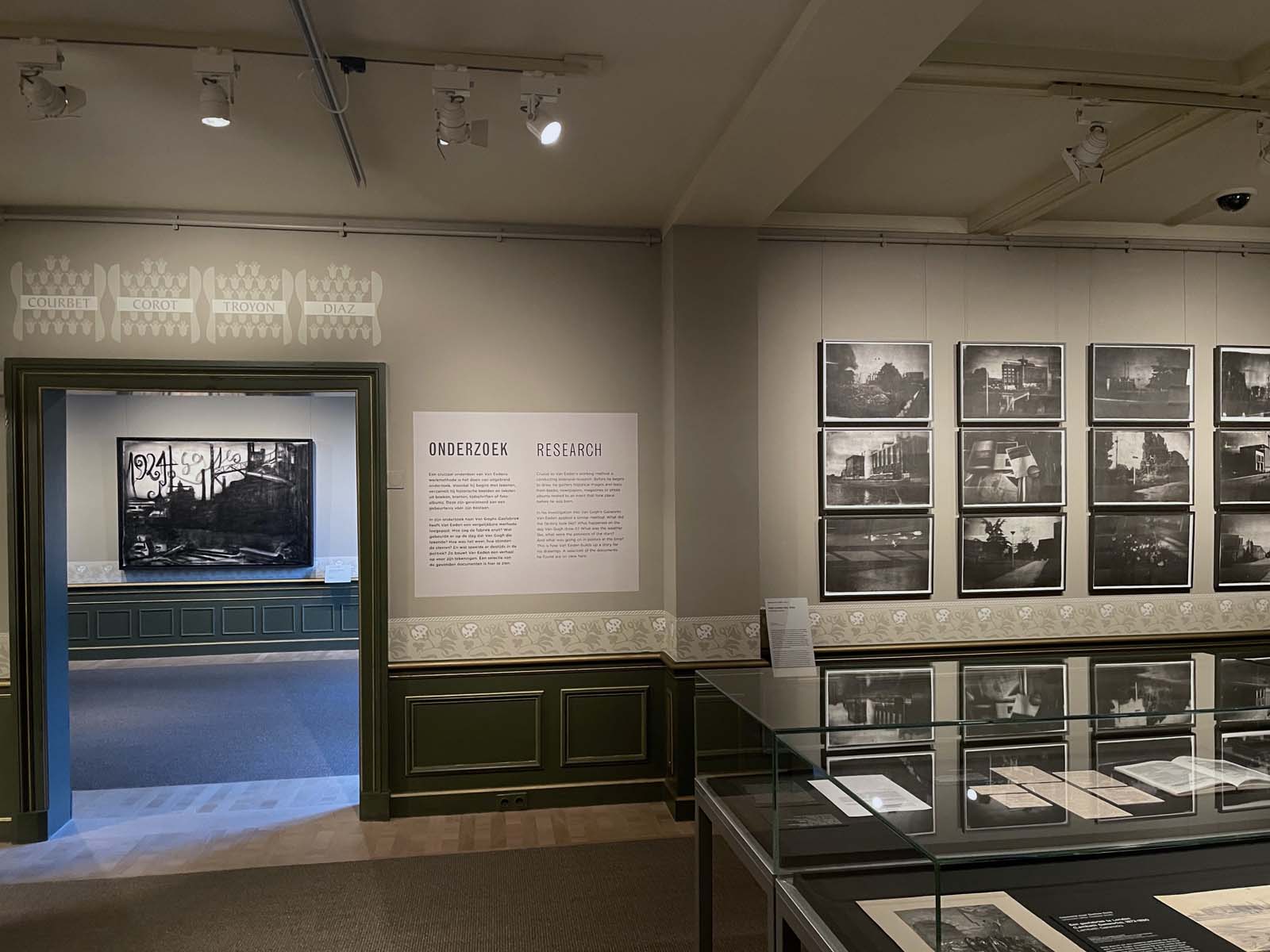
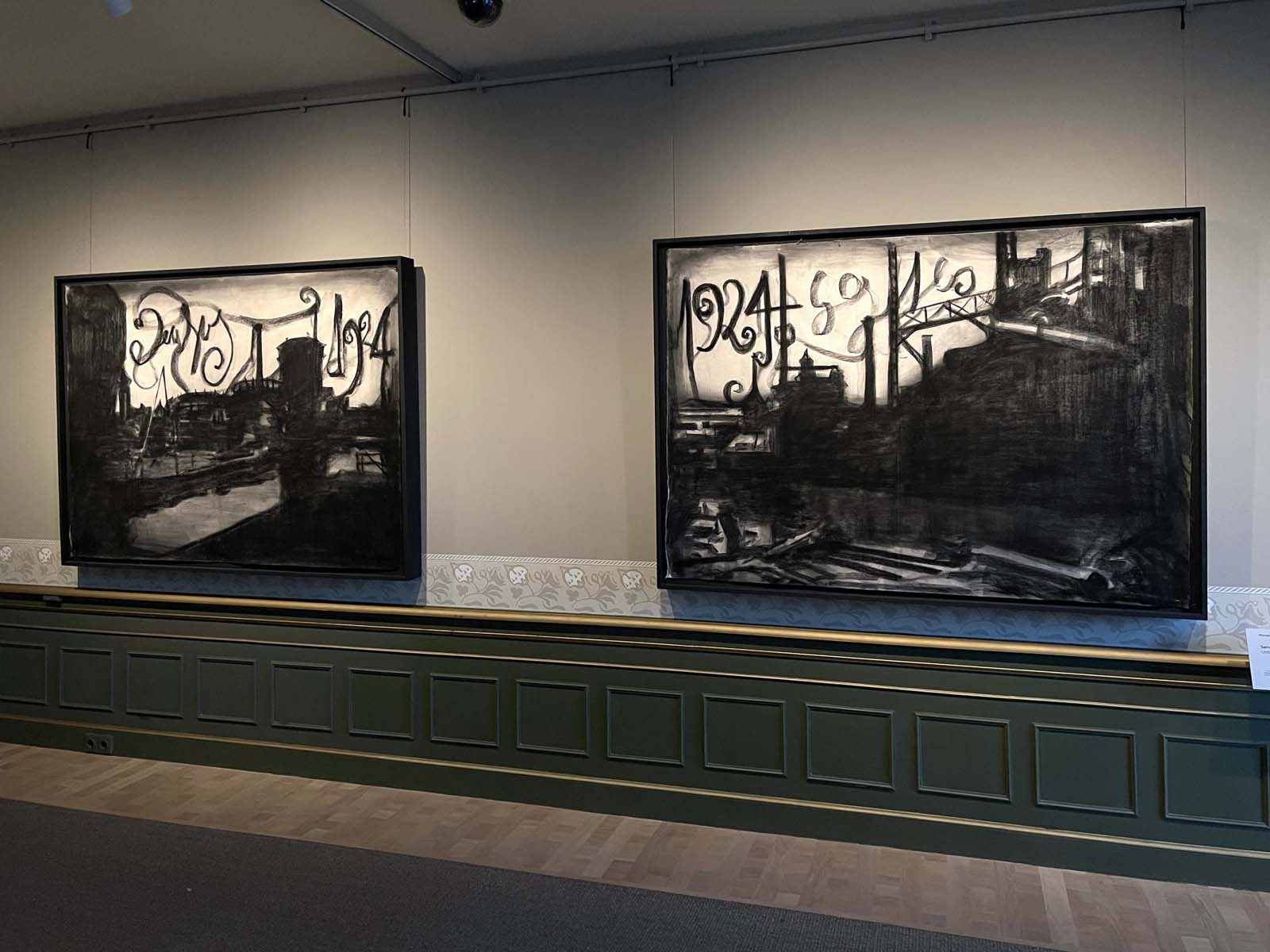
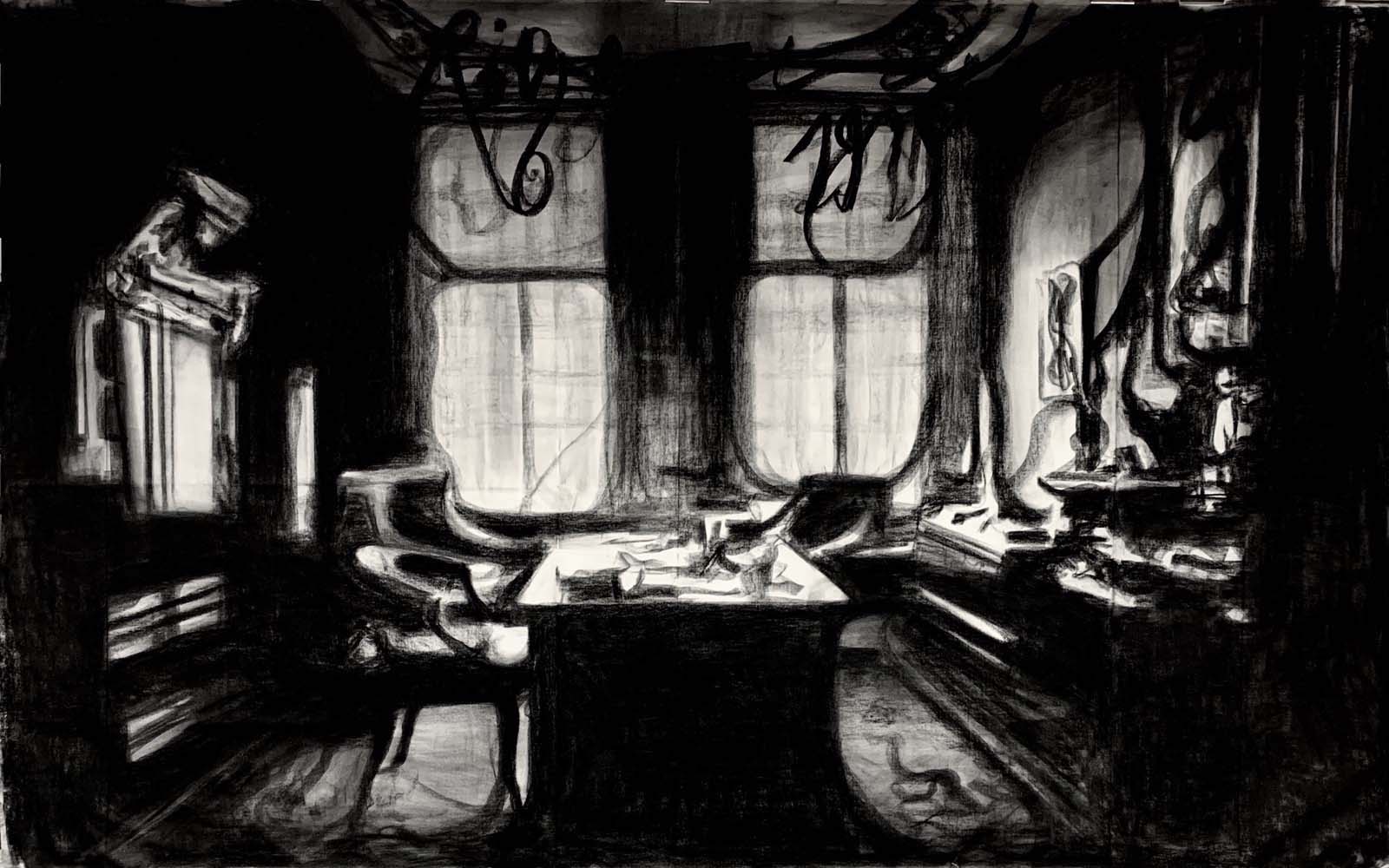
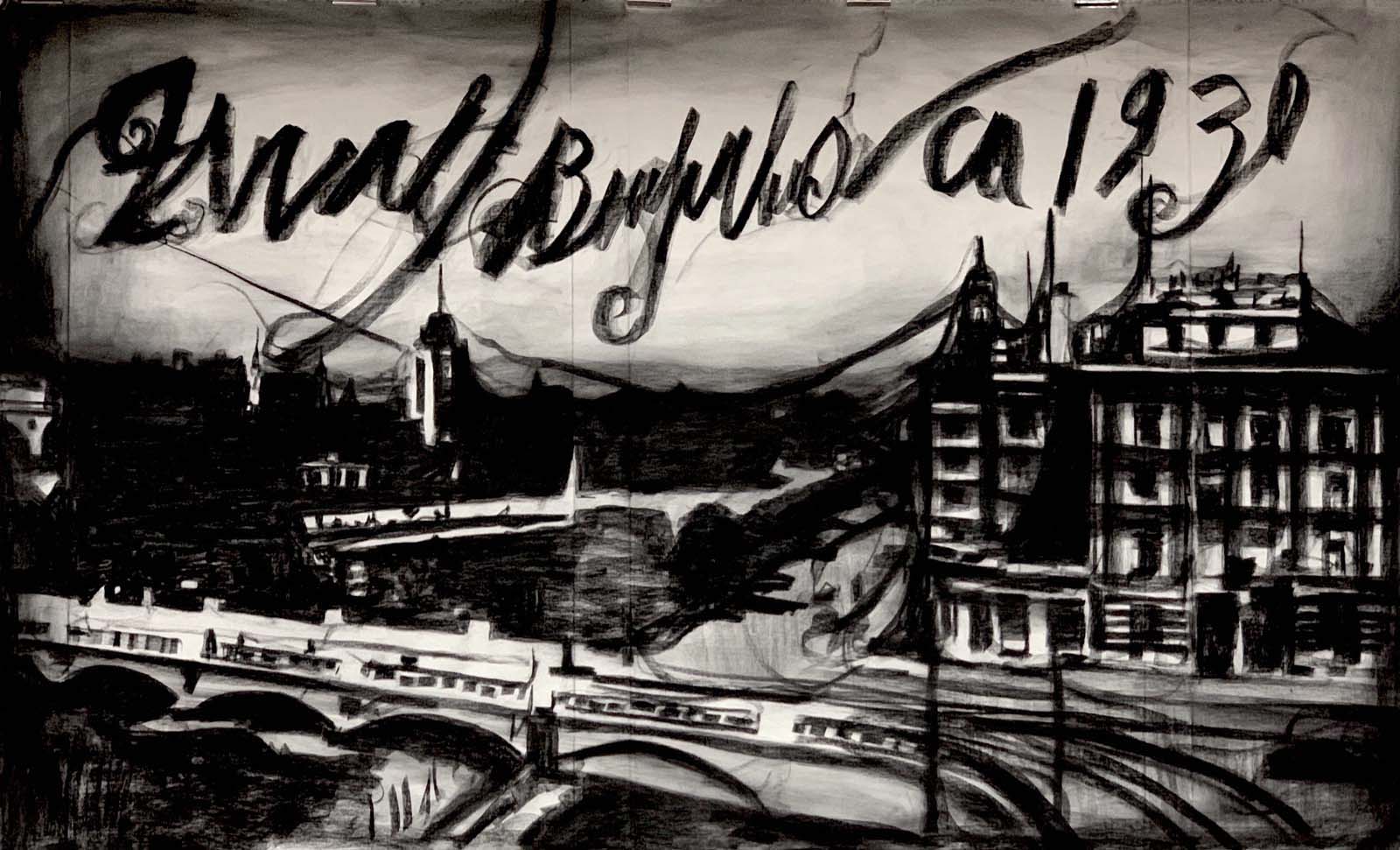
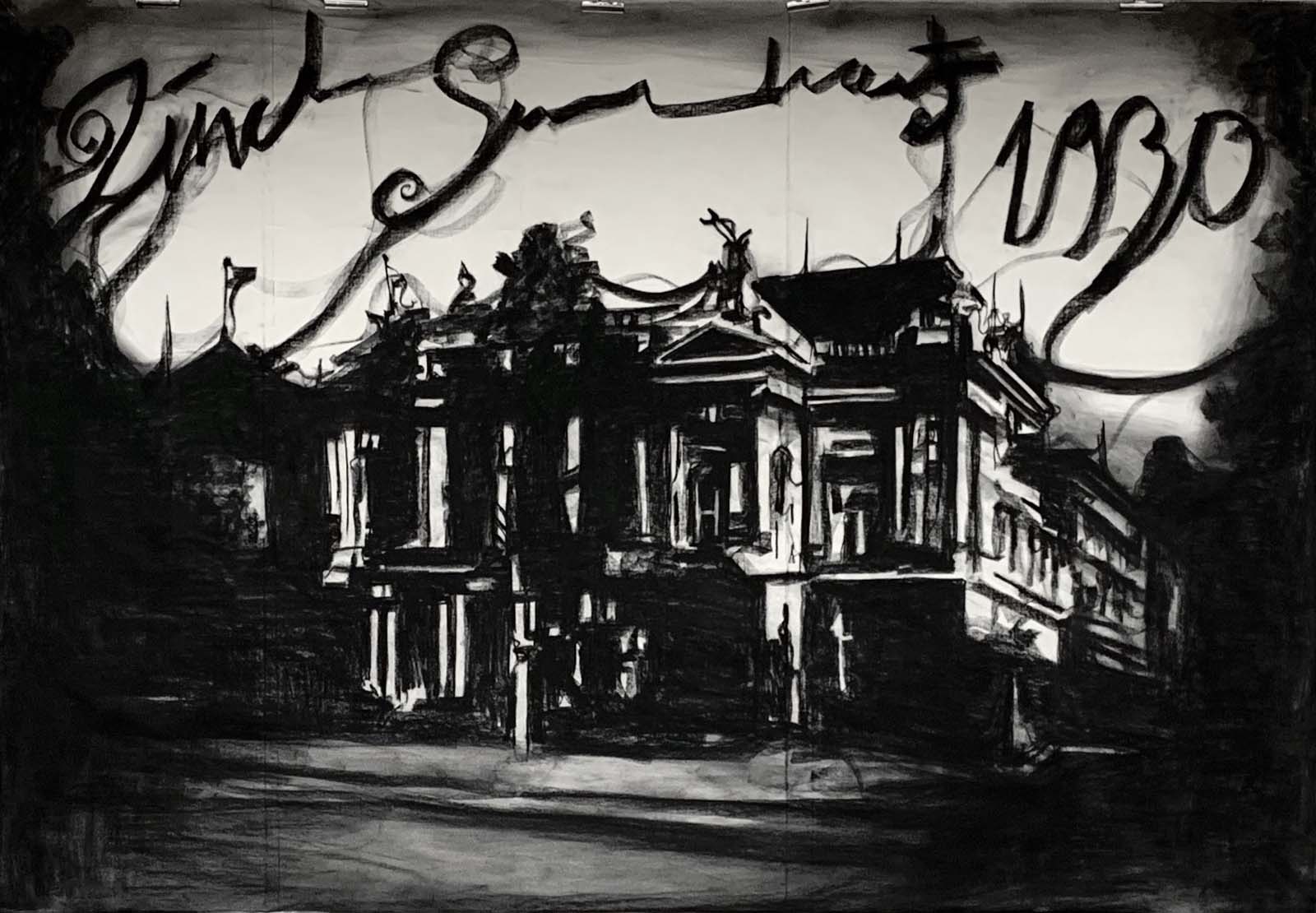
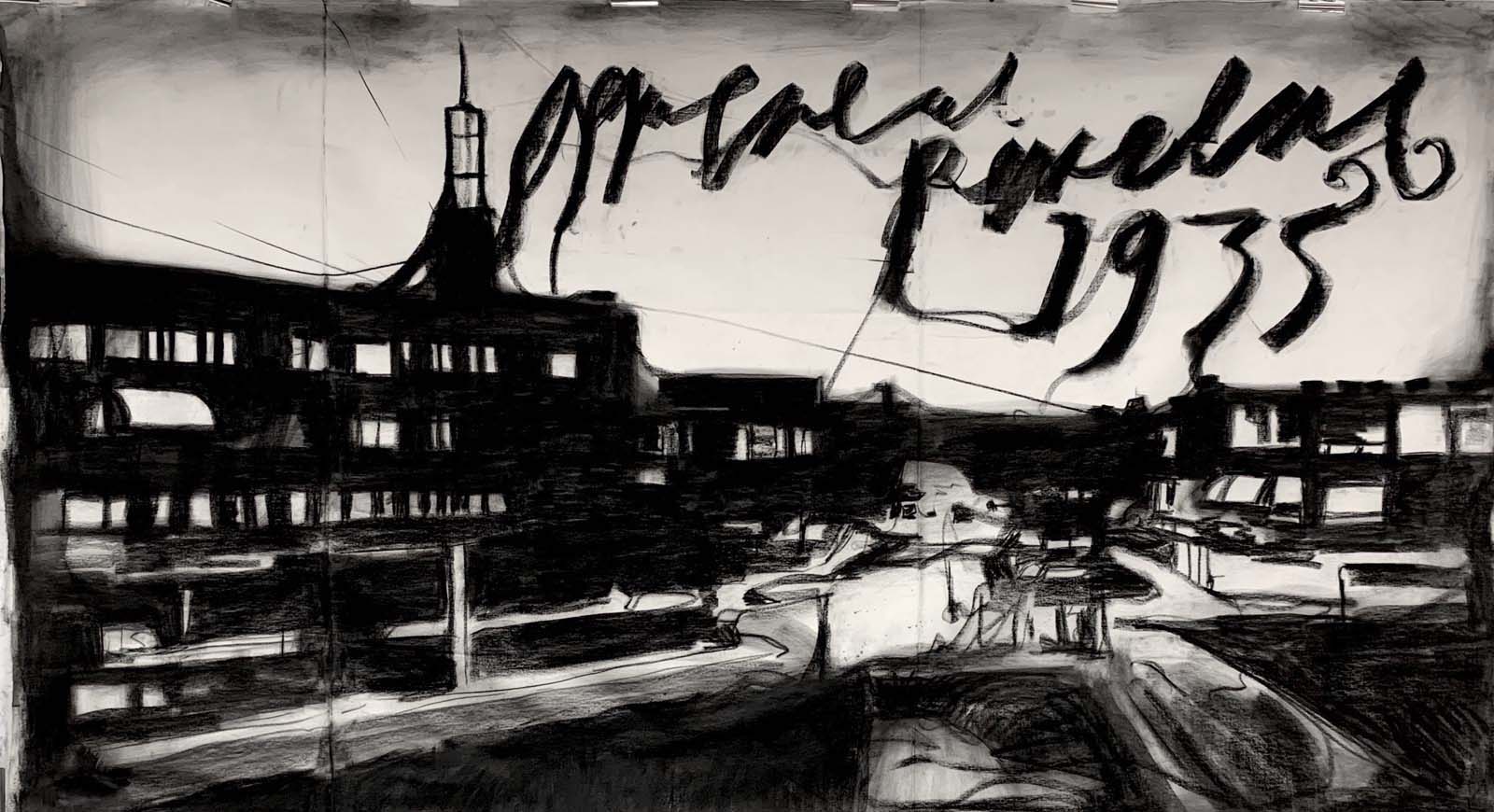
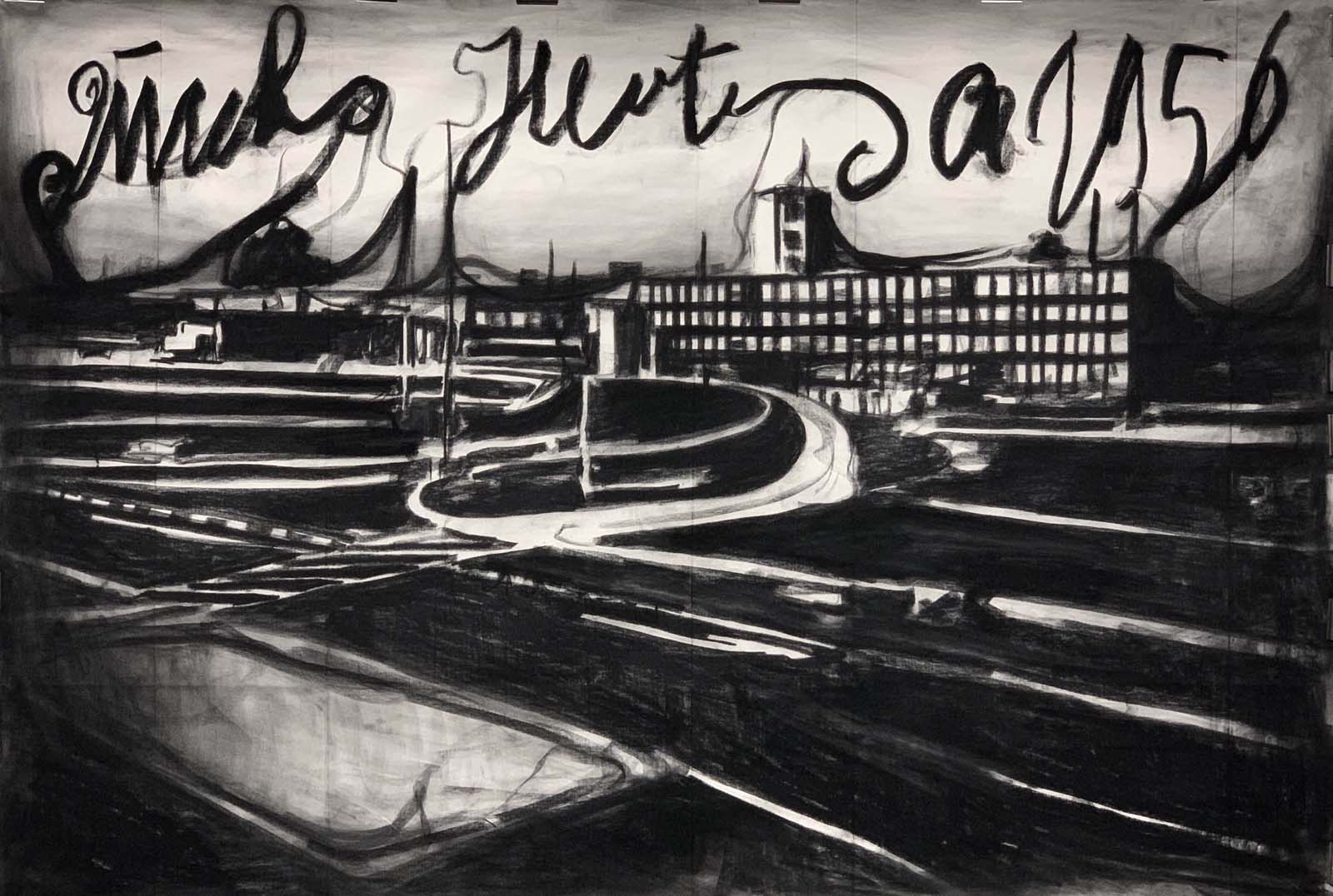
Marcel van Eeden was born in 1965 and all of his work is concerned with the period before that year. Thus he confirms, so to speak,his presence during his absence before his physical birth as the person since known as Marcel van Eeden. For this he chose a method to which he has been faithful for many years now. His work consists without exception of small pencil drawings made with reference to old photos. In the beginning these were townscapes of The Hague, the town of his birth where he still lives. In the course of time a whole series of subjects have presented themselves: townscapes, mountainscapes, pubs, flower-pieces, blazing fires and also abstract images derived for instance from parts of ads in old papers. But he also uses a kind of écriture automatique in which the subject vanishes in the drawing, so to speak (another instance of presence in apparent absence). The diversity of themes might convey the impression of incoherence or at least one might wonder why such a lot of different (but in themselves not very remarkable) genres do appear. There is a good reason for this: in fact, for the selection of images literally everything will do which is available as long as it dates from before 1965. The work aims to picture life as a whole, everything really as a kind of encyclopedia of lost ( but also partly regained) time.

So it is not to be wondered that Marcel van Eeden's drawings look somewhat 'old-fashioned'. They are a direct consequence of "old-fashioned' images. This is their essential quality and that's why in his work we encounter a lot of references to styles dating from the late nineteenth century and the early twentieth century. But that doesn't matter that we have to do with 'old-fashioned' art here because in our day and age quality (in both senses of the word) is no longer exclusively defined by the outward appearance of an artwork but also (and maybe more so) by the ideas on which it is based. When it is the concept, as a manner of speaking, to express life during 'death' before this life, the work will by definition look like something which is at least derived from a vocabulary from that period for the simple reason that what we regard as a more 'modern', a more 'contemporary' vocabulary had yet to be invented.

This brings us to the next issue: how long is this period? After all, before 1965 may mean anything from the moment of conception of the individual to the Big Bang. At least one could start out from the genesis of human consciousness. Marcel van Eeden's images aren't that old. His examples do not originate from the first visual traces of mankind (arrowheads, cave drawings). He has selected photography as his starting point. This doesn't seem an arbitrary choice: a large number of images which may be regarded as documentary date back to long before the invention of photography including the visual arts. Much information about earlier times can be derived from painting, for instance, which as a source has a certain importance. But apparently Van Eeden doesn't attach much value to this. He obviously regards photography as the medium most capable of depicting reality as he could have witnessed it. One may dispute this; we now know how manipulative photography can be or in what manipulative ways it can be used and it is certain that the person behind the camera plays an important part in the shaping of the image as he, consciously or not, turns photography into an interpretative instead of a purely descriptive medium by choosing a certain position or camera angle, the activities in the dark room and so on. Nevertheless these are for the greater part reflections from after 1965, when we started to think differently about photography and its capacity to serve as proper evidence- although the practice of retouching unwelcome persons off a photo was used much earlier already: Trotsky's removal on Stalin's orders from a picture is commonly known. However that may be, Van Eeden probably uses photography as an example because it is comparatively capable of being the most factual of all documentary means of depicting and maybe also because he isn't really interested in all those centuries preceding his physical birth but rather in a smaller number of generations with wich one can feel more easily connected than with a comparatively abstract notion like 'history'. Only then conditions are met for the genesis of a kind of nostalgic need of a life before this life- which seems to be what this is all about.

One may wonder why Van Eeden still has to make drawings after the photos he uses; those photos in themselves might do just as well for his purpose, one might argue, for after all they express exactly what he is looking for. I think this has to do with a certain attitude towards being an artist. The artist wants to create something, to add something to what is already there because an artwork is not only an opinion about the world but also a phenomenon in the world. We may add to this, somewhat paradoxically, the fact that drawing (and surely also the specific way of drawing, the handwriting, no matter how closely it follows the photo) transforms the original image from factual documentation to personal interpretation with as a consequence in this case that the latent nostalgic character is enhanced. In other words: nostalgia in fact only originates in the drawing, which is part of of the present looking back, while the photo at the moment of its production wasn't nostalgic at all but on the contrary 'modern', a contemporary image of a time in which Van eeden was already present in an immaterial way- almost literally in that photo. Maybe that's why the photo has to be drawn, to make the immaterial material, to pull the past into the present, to induce, confirm and clarify a continuity of Marcel van Eedenship and so, eventually, to define his own identity as transcending 'traditional' historical categories.

In a sense we have to do with a longing that is not to be satisfied or fulfilled, the longing for a life before his life, the longing for a life before this life, the longing for a period in time we haven't actually experienced, even if we would indeed have been present metaphorically in an 'immaterial' way. That's why this work is in the first place about identity and confirmation of identity rather than some kind of metaphysical consciousness dating from before the conception of Van Eeden's personal consciousness as a physical person. I believe it is about the consciousness of this moment and, above all, about the inconscious longings in all of us. It is the artist's task to make us aware of those unconscious longing's (at another level: to transform them into art), to give them (a) form.

Thus Van Eeden's art is one of conscious regression, of nostalgic utopism, it is a song of longing. It is hardly exaggerated to say that the oeuvre as a whole may be regarded as one large work- even if the individual drawings can be understood and enjoyed separately. This is not unique but in this case it is so evident because the work has one coordinating theme incorporating all the seperate genres and appearances. This makes it really contemporary. Although the idea to document everything which is known about something (or even about everything) is of course nothing new, dating back at least to the eighteenth century with the invention of the encyclopedia- that reckless attempt to split up the universe in terms of ABC-, it is a contemporary idea to do this to data which in fact solely regard the author without any pretence to universality. In this context the proportions of Van Eeden's drawings are remarkable: always 19 x 14 cm and in some cases 19 x 28 cm, in other words a uniform measure or its unilateral duplication. This reminds one of card indexes, box files, filling cards; it enhances the idea that the whole work together makes one ans the same statement, e.g. that something (potentially everything) is being mapped. In this case- where it happens not in the name of science but in the name of nostalgia- as in any other case, the mapping of everything proves an impossible task. Everything is just to much and even if it were a conceivable enterprise, one person would never be able to pull it off in one lifetime. So this is also about human impotence. In the face of everything we are powerless, so many things are bound to escape us. The poignant attempt at charting everything must to my mind be regarded as exactly that: a poignant attempt, an aspiration doomed to remain an aspiration forever, an endless longing only to be fulfilled through itself. Thus lack of fulfilment remains a condition for a dreamed fulfilment, just as absence remains a condition for a dreamed presence in another period.

We might go one step further and interpret the work as an even more strictly intrapsychic phenomenon. Then there would not only be an unconscious longing but maybe even a longing for the unconscious. Now the not materially experienced past becomes a metaphor for the unconscious, for a mer à boire of associative images which is inexhaustible just like the multitude of images from which Van Eeden chooses for his drawings. And in which there is no actual selection just as there is none in Van Eeden's choice of photographic examples; after all he can use everything and chooses automatically what is more or less coincidentally available at a certain moment. Just as in the case of an unconscious mental process, there is no conscious, rational choice; here intuition and, maybe, coincidence are at work.

This doesn't affect the essence of the work. The core theme remains the longing for the indefinable (whether it was once defined or not), for the unknown (whether it was once known or not), for the fulfilment of the unfulfilled. And so we have arrived at one of the most pregnant themes of the visual arts which goes back a very long way into tradition (if not to the actual beginning of art): the longing for paradise lost. After all we as human beings have never actually been there but we do 'recall' it longingly, whether it be interpreted in a religious or in a psychological way as a longing for the safety of the womb or whatever. In other words, on closer inspection Van Eeden's work proves not so strictly personal as it seemed at the outset. It is a personal expression of an ancient collective longing which is still valid and probably will be as long as there will be people on the planet. Thus Marcel van Eeden joins- with small work- a great tradition.

home: http://www.marcelvaneeden.nl | terug back